Palacio Real de Madrid – History and Overview
Discover the Royal Palace of Madrid, its Bourbon origins, architecture, and evolving ceremonial role.
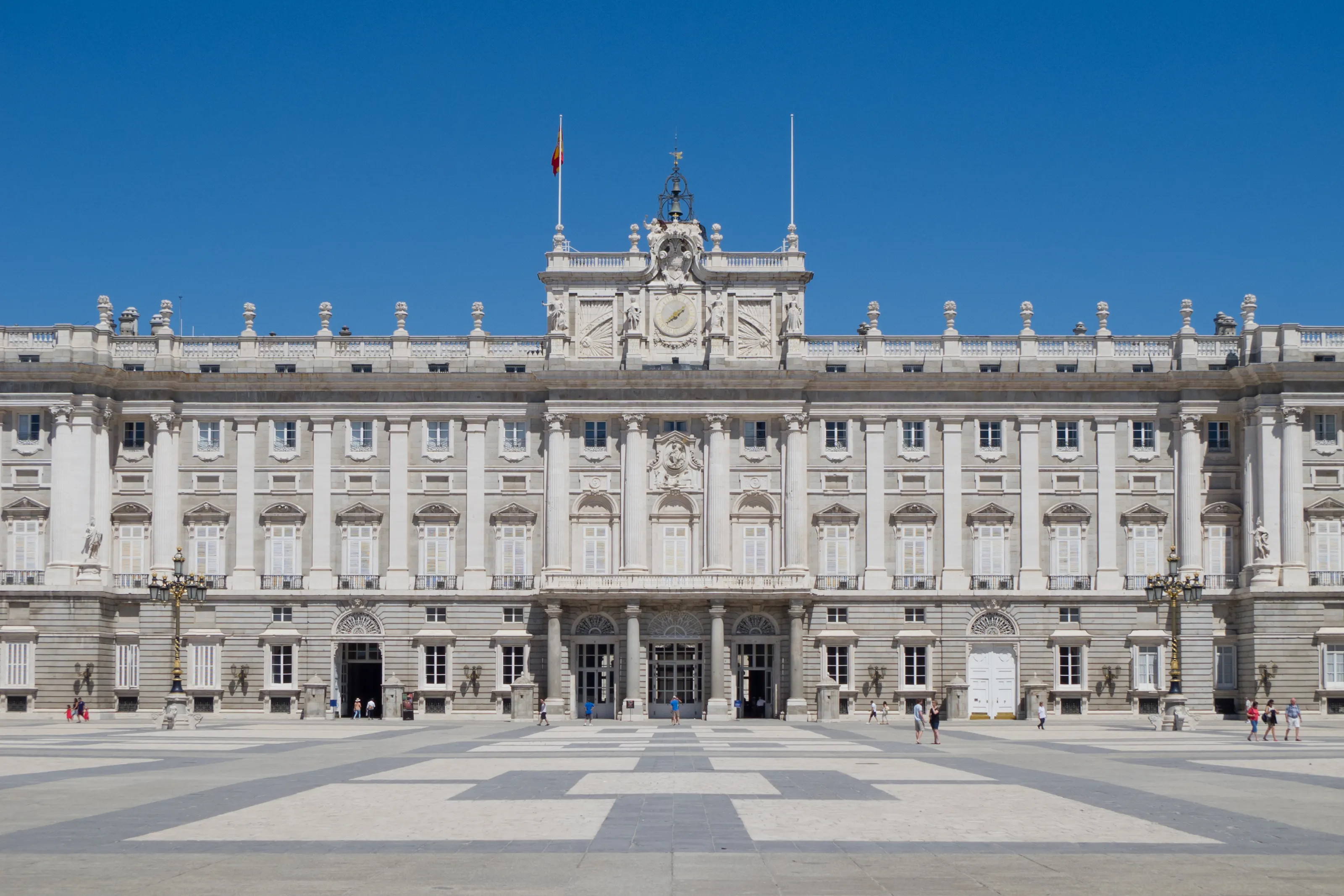
The Palacio Real de Madrid is one of Europe’s largest royal palaces, a ceremonial residence that blends Baroque ambition with Classical restraint. Built after the Alcázar of Madrid burned in 1734, the new palace rose under Philip V, influenced by Italian designers and Bourbon protocol.
Contents
- Overview
- Key Milestones
- Architecture at a Glance
- Must-See Highlights
- 2–3 Hour Smart Route
- Practical FAQ
- Further Reading
Overview
A palace that is both a stage and a storehouse of Spanish identity. Expect monumental exteriors, sumptuous state rooms, and collections that connect Spain to wider European craft networks.
Tip: Arrive 15 minutes before your time slot to settle bags and scan the esplanade views.
Key Milestones (1734 → Today)
- 1734: Alcázar fire clears the site for a new vision.
- 1738–1755: Construction accelerates; G. B. Sacchetti refines the master plan.
- Late 18th c.: Interiors blossom under Carlos III and Carlos IV.
- 19th–20th c.: Electrification, heating, and ceremonial modernization.
- Today: A premier state venue—the royal family resides elsewhere—welcoming visitors year-round.
Architecture at a Glance
- Baroque massing with Classical order keeps grandeur legible.
- Limestone and granite façades; interiors of marble, stucco, and gilded wood.
- Processional planning: courtyards, axes, and carefully staged thresholds.
| Element | Why it matters | What to notice |
|---|---|---|
| Main Staircase | Sets ceremonial tone | Marble balustrades, ascending light |
| Throne Room | Power performed | Velvet, mirrors, symbolic lions |
| Chapel | Devotion and sound | Vault geometry, warm acoustics |
Must-See Highlights
- Plaza de la Armería for parades and the changing of the guard.
- The Throne Room and Gasparini Hall for immersive décor.
- The Royal Armory for technology meets pageantry.
- Gardens (Sabatini and Campo del Moro) for two distinct moods.
Note: Some rooms rotate access due to ceremonies or conservation.
2–3 Hour Smart Route
- Façade and esplanade panoramas.
- Left toward the Main Staircase; pace yourself and scan up.
- State Rooms sequence → linger in the Throne Room.
- Chapel pause; listen for the room’s gentle echo.
- Royal Armory close-up study of armor articulation.
- Exit into Sabatini Gardens for a quiet finish.
Checklist
- Map saved offline
- Tickets loaded
- Water bottle
- Phone on silent
Practical FAQ
- Is it a residence? Ceremonial only; the monarchs live at Zarzuela.
- Photography? Usually permitted without flash; look for posted signs.
- Tickets? Book online; consider combo passes with the Armory.
[^1]: Timings and access vary on state event days; always check the official schedule.
About the Author

Heritage Writer
I created this guide to make your Royal Palace visit simple, insightful, and stress‑free.
Tags
Comments (0)
Loading comments...