Visiting timetableClosed
|Friday, October 16, 2026C. de Bailén, s/n, 28071 Madrid, Spain
Back to architecture
design
Architecture of Palacio Real – Baroque and Classical
Explore the Baroque and Classical synthesis in the Royal Palace of Madrid’s façades and interiors.
10/18/2025
16 min read
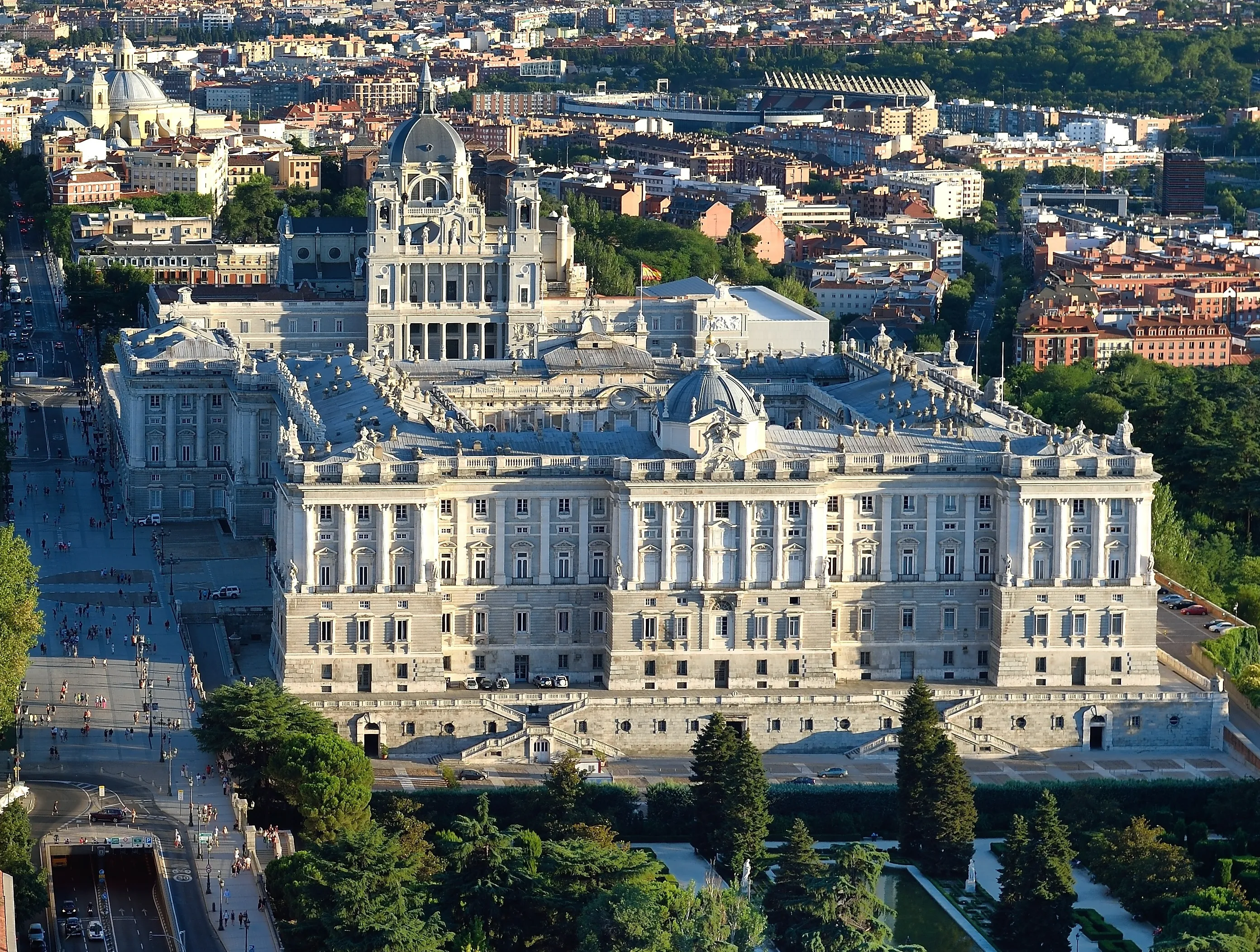
The palace reconciles Baroque theatricality with Classical restraint. Its plan leverages axes, symmetry, and processional routes, while façades deploy orders and rustication to scale the monument and guide the visitor.
Contents
- Design Vocabulary
- Façade Logic
- Interior Grammar
- How to Read a Room
- Quick Field Exercise
Design Vocabulary
- Rusticated base anchors the mass and resists visual erosion.
- Pilasters and columns create rhythm and hierarchy across bays.
- Balustrades and statues crown the silhouette with allegorical cues.
- Grand portals transform entry into ceremony.
Façade Logic
- Horizontal cornices calm vertical rush; windows align to express order.
- Corner emphasis strengthens the volume against the skyline.
- Stone color variation helps the eye separate levels.
Interior Grammar
- Marble stairs choreograph ascent and slow footsteps to match protocol.
- Stucco ceilings add depth through sculpted light and painted shadow.
- Gilded frames bind textiles, mirrors, and light into coherent panels.
| Element | Function | Experience |
|---|---|---|
| Stair | Procession | Elevation and spectacle |
| Hall | Reception | Protocol and display |
| Chapel | Devotion | Silence and resonance |
Tip: Count the façade bays to feel how order tempers grandeur; sketching a quick elevation helps lock the rhythm in memory.
How to Read a Room
- Start with the ceiling to understand the intended hierarchy.
- Follow the light: windows, mirrors, then gilded edges.
- Finish at the floor patterns to trace movement cues.
Quick Field Exercise
- Pick a room, stand at center, and rotate slowly.
- Note three repeated motifs and one anomaly; ask why it differs.
About the Author

Architecture Historian
I created this guide to make your Royal Palace visit simple, insightful, and stress‑free.
Tags
Architecture
Baroque
Classical
Madrid
Façade
Comments (0)
Leave a Comment
Loading comments...